Thursday, February 16, 2023

Risks and Hazards of Crowd Management - How To Resolve


Assess crowd safety risks and identify hazards 

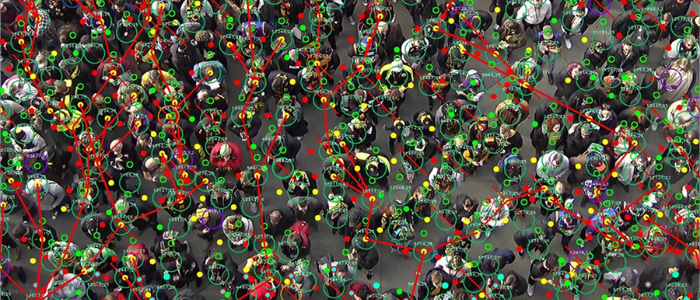
Before involving in crowd management technology in Malaysia, one must think about the risks associated with it. One has to account for what may cause harm to event staff and visitors through crowd movement, dynamics, and behavior as people arrive, enter, move around a venue, exit, and disperse.

Remember to consider aged people and persons with disabilities or learning difficulties when deciding the appropriate action to take.

Risk assessment

Take plausible steps to eliminate or reduce the risks. This process is known as risk assessment and is something duty holders are instructed to do by law.

Risk assessment is about identifying and taking necessary measures by crowd management technology Malaysia to control the risks in the workplace, without creating huge amounts of paperwork. If a company has less than five employees the risk assessment does not need to be written down.

As an early priority, organizers should affirm that they can manage a crowd safely for the type of event and at the venue chosen. The event may be free or take place on urban streets or open spaces, you should still apply the same crowd management principles to make it as secure as possible.

Assess the venue

A key part of the crowd assessment will be to determine the venue's safe capacity. For outdoor openings, where the boundaries of an event are less well-defined, break the task down areas into zones, such as arrival and exit points, viewing areas, and the spaces in and around attractions or structures like bars and stages.

Visit the venue several times. It will help you predict and deal proactively with a crowd's likely actions.

Assess the audience

Visitors may be unknown and not aware of the venue layout and its facilities. People may even become disorientated if they arrive in the light and leave in the dark to ensure there is enough lighting.

Inadequate management of queues or delays may provoke people to surge towards the doors when they are opened or climb over barriers, steering to overcrowding problems in other areas. People may climb onto structures, such as scaffolding, to get a better view and encourage others to follow, putting them at risk of a fall. Assess the probability of this happening by crowd management technology Malaysia and take steps to manage it.

Assess the program

Several activities enacted at the same time may result in considerable crowd movement. For example, where one particular performer has a large or enthusiastic following, the audience may suddenly surge forward and trampling could result. Or being unsatisfied with the quality of a performance or outcome of a sporting fixture, the audience may become aggressive, offensive, and uncooperative. Being intoxicated and/or recreational drugs can exacerbate this behavior.

What can be done

Some hazards may already be controlled, whether by deliberate measures or by the circumstances in which they are found. Therefore problem should be identified and the precautions and decide whether they are adequate or whether more should be done.

Create a crowd management plan

Once you have estimated the risks, you should create a crowd management plan. Use any venue/site design drawings to help you with this. Your plan should also incorporate how you will respond effectively to accidents and other emergencies.

Review your plan

Organizers, their stewarding contractors, and other agencies involved should periodically check the methods for controlling crowd safety to ensure they are working and being followed. Enclose other agencies like the police and local authorities in the debriefing process. Listen to problems and successes and make improvements in the future.

Author's bio: The author of this article works in a company that provides emergency evacuation and well-equipped crowd management services for many years successfully and is equipped with an independent modern cloud-based execution system.


Sunday, July 10, 2022

Beginner's Guide Of Fire Monitoring System


Fire alarm systems are an important part of fire and life safety of a building and its occupants. There are many functions that are served by fire alarm systems and it can all be a little confusing for someone new to fire alarms, so I decided to create a visual guide to fire alarm fundamentals. The purpose of this blog is to share that visual guide and to discuss some of the key components and functions of a fire alarm system.

How Do Fire Alarm Systems Work?

The main purpose of a fire alarm system is to detect a fire and immediately notify both the occupants of the building and emergency services from a centrally controlled and monitored location. These systems also monitor themselves, identify the location and origin of alarms, and detect problems with connections and wiring that may prevent the system from working properly. Essentially, best firemonitoring system from Afantage has four primary functions.

Ø Search

Ø Warning

Ø Observation

Ø To control fire

These highly advanced systems use a network of instruments, instruments and control panels to perform these four functions.

Types Of Fire Monitoring Systems

1.  Smoke Detector

A smoke detector is a fundamental component of any comprehensive fire alarm system. As their name suggests, their primary function is to detect and alert the occupants of a building to the presence of smoke in the air. EPS installs smoke detectors that use photoelectric sensors to detect smoke particles when a beam of light passes through. With their relatively small size and ease of placement, smoke detectors can be installed in relatively confined spaces or in large rooms to provide maximum security.

2.  CO detector

Carbon monoxide is released whenever fuel is burned incompletely, which means that every business with a water heater is at risk of CO poisoning. CO detectors use electrochemical sensors that send a signal to a fire alarm control panel when carbon monoxide is detected.

3.  Hand Pull Station

When most people think of a "fire alarm system," it is the device they are most familiar with. As their name suggests, hand pull stations are easily recognizable devices. In the case of a fire or other life safety emergency, an occupant can pull down the handle on the device to trigger an alarm signal to the fire panel, thus activating the strobe and siren. Where it can take several minutes for smoke to reach the smoke detector, a hand pull can be activated by a person within seconds of an emergency, allowing for faster evacuation and response times by emergency services. Hand pulls can come in a variety of shapes and sizes and are usually offered with a back-box or cover if requested.

4.  Voice Evacuation System

Horns and strobes can alert employees to immediate fire hazards, but fire drills and the frequent occurrence of false alarms can lead to "alarm fatigue", a reduced sense of urgency usually associated with such incidents. Additionally, simply sounding the alarm through a large facility can lead to a chaotic evacuation. The voice evacuation system was created to overcome these problems. As an enhancement of a traditional fire alarm system, a voice evacuation system continuously transmits pre-recorded messages into a building to guide occupants out of the building through the safest route using direction. The systems are extremely versatile, as recording can be made for a variety of life safety situations, including fire, severe weather, gas leaks, active shooters and more.

Benefits Of Fire Monitoring System

1.  Abstain From Smoking

The most important reason is probably only what you really need. This can save the life of anyone in the house at any time. This is especially important at night. One who is sleeping does not wake up on time when there is a fire. Sometimes people die due to smoke while trying to escape. Having a system can give you peace of mind and security.

2.  To Find Out Quickly

The sooner a fire is detected, the faster firefighters will respond. This could mean saving the home from major damage or, even worse, avoiding complete destruction.

3.  Insurance Discount

This can save you money on your home insurance. There are few policies which often give discounts to customers who have these systems. This is because it may be possible to save the home rather than lose it entirely. In addition, it shows the insurer that the homeowner is taking responsibility and is prepared in case of any unfortunate event.

4.  24/7 monitoring

A home fire alarm system provides security to the homeowner 24 hours a day, every day of the week. Your home will be monitored when you are away, and when you are sleeping through the night. You and your family can feel safe knowing that this surveillance never stops.

5.  Easy And Economical

The cost of having a system is very reasonable. Even if you have insurance that can replace any lost items, many of them are irreparable. This would include photo albums, gifts from family members or items passed down from one generation to the next. Staying somewhere else, at least for a while, will also put you in serious trouble.

Monday, June 20, 2022

ESSENTIALS OF AN EMERGENCY EVACUATION PLAN


All emergency situations require an instant and effective action, it is quite natural that by human nature we began to panic and thus we cannot handle the situation as effectively as we could by staying calm and cool. There are many crucial elements that all emergency evacuations plans must consist, let’s look upon some of the essentials of an emergency evacuation system plan as suggested by Afantage:

1.   Acknowledge all the Individuals

It is very important that all the emergency plans should be designed in an universal manner i.e., it should acknowledge all individuals. When an emergency situation arises, different people are affected in different manner, there should be an established protocol and set of procedures which must be followed strictly in order to reduce the impact of that hazardous event.

2.   Varied Actions in varying Situations

It is true that when any emergency situation arises, frequent chaos takes place and in reality, people are out of their senses. Different emergency plans require different types of evacuation which depends on many factors, in some situations it is beneficial to stay indoors while in some immediate evacuation is necessary.

3.   Specific Procedures with someone to guide

All the emergency plans should include the specific requirement of emergency equipments, routes, etc. It is also quite important to inspect the routes on a frequent interval, each plan should assign an individual who would take the responsibility of the safety of the others by following the pre-determined evacuation plan. Every individual must know their particular role in the whole process of evacuation.


4.   Proper Drills and regular updates

It requires a very dynamic research and study while planning any emergency evacuation plan, the plan must be made in the light of modern and rational approach. It is quite important that the plan must be updated regularly, all the aspects must be revised. Once the plan is updated, there should be a proper drill where all the individuals can know their role and they can clarify their doubts.

5.   Post-Disaster Communications

All the emergency plans have to incorporate the steps to be followed after the disaster, a good emergency evacuation plan does not end immediately after the evacuation is completed. The mechanism of such plans should be well focussing on the wellbeing of the individuals.The individuals must develop a chain of communication among them so as to deal with the disaster more effectively and efficiently.

These were some of the most essential elements that every emergency evacuation plan must have, however there are many other minor elements as well which must be taken care off. Every emergency plan should prioritize, reducing the damage to property, documents, etc., because it is quite important to normalise all the operations as soon as possible after the disaster has occurred. All the companies should also make sure that they are having all the right equipments at the time of emergency, organizations can also reduce their burden by hiring professional emergency planners.


Monday, June 6, 2022

Evacuation - A Mere Anxiety in a Skyscraper


Working as well as living at a height is an unavoidable situation nowadays in our modern living pattern. As the number of skyscrapers is increasing, the number of safety issues is also growing in high consideration. Problems can be natural or man-made, and safety and security have always been a big deal. High-rise buildings that are built keeping utmost attention to beauty, fame, economy, associations, and commemorations, must think about the skyscraper evacuation problem and the proper solution to it.

Investigation

To maintain a proper evacuation system in a skyscraper, the first thing which is needed is the proper investigation of the building. Experts need to inspect and note down all the exit points and take extra precautions to check the marked exit routes. They need to pay particular attention if the escape routes are being compromised or obstructed. They might get additional challenges if evacuation were being done at night, a person including in a wheelchair, a child, or a visitor who is unfamiliar with the building plan. All the inspections must be done with proficiency.

Planning

After a successful investigation, there needs to be perfect planning based on the outcome of the inspection. Quick evacuation for a large number of people in a short time in high-rise buildings has now become a worldwide problem being explored by professionals. This problem becomes more difficult due to the feature of multiple floors, height, and concentrated people. Elevators possess intrinsic value in these buildings. But at the time of emergency, all the elevators stop working. And maximum pressure goes to the lower part of the buildings. So staircases and sideways are the mere route to exit. Vertical self-descending lift, landing escaping bag, and tilt slideway escaper, are some demanding equipment in the crisis period. For fire emergencies, the alarm should function properly.

Maintenance and license

Proper maintenance of the evacuation equipment is very important so that it can work according to the need in a distressing situation. The license of this equipment should be renewed in time.

Evacuation drill

Once the emergency skyscraper evacuation system plan is successfully generated, it is important to test and drill several times a year with a large number of people. The proper plan of action must be inferred from all the people residing there or related to that building.

Afantage delivers the best skyscraper evacuation system services in Malaysia.  Their unique and quick evacuation systems from high-rise buildings,

in any circumstances, with the help of modern equipment, demands commendable applause.Visit for more details.


Thursday, January 13, 2022

About The Latest Crowd Management Techniques

 What Events To Consider Regarding Crowd Management?

Crowd management usually becomes relevant only when your event draws large crowds. If you are planning a small get-together with family and friends, managing the crowd will not be a problem. But once you start organizing these types of large events, it becomes more relevant:


Ø Music Festivals and Festivals

Ø Sports events and tournaments

Ø international business conference


Ø 

Why Is Crowd Management Important?

People act differently when they are part of a larger crowd of faceless individuals. Strong emotions such as joy, anger, and excitement can spread quickly and become dangerous. Lack of crowd management can lead to property destruction, personal injury, and general felony. Read this comprehensive list of crowd disasters to see how bad things can happen as stated by Afantage with the best crowd management technology.


Different Techniques Of Crowd Management

1.    Wayfinding Optimization

To guide your visitors there, you'll need strong route-finding techniques. Wayfinding is a well-developed area of expertise; In the realm of crowd control, wayfinding technology uses clear signage and markers to make navigation easier – and to avoid the kind of crowds that can build up if visitors are confused. By introducing technology to find great ways for your locations, you'll also grow your brand—and ensure a great customer experience. Let the following principles guide you as you optimize finding your way.

2.    Queue Management

Lines are a natural part of any shopping, travel or entertainment experience. But not all lines are created equal: Some are tedious and stressful—and others are not. For example, you can distract your visitors from the monotony of a long queue with in-line entertainment and merchandise. Better yet, reduce their wait times by replacing their queuing system as stated by Afantage with the best crowd management technology.

3.    Temporary shutdown

When you need to block off an area - whether for security, cleaning, repair or renovation - you'll want to mark it clearly so your customers don't get confused. If you block access to a major street or facility, give your visitors a clear choice: another restroom they can use or a different route they can take to reach their destination. Otherwise, you will end up with a lot of dissatisfied customers. Post and panel barriers keep people from moving, and they also allow you to slide in signage that can be used to indicate customers another way or apologize for inconvenience. Using our Shuttletrac Panel Cart, two or three workers can easily transport and set up 18 posts and panel barriers at a time.

4.    Rapid Deployment

Whether you need to control an influx of customers coming in for curb side pickup or ward off a restroom with an overflowing toilet, a good rapid deployment strategy is critical to crowd management. Sometimes rapid deployment means blocking access to an area—such as a tarmac or basketball court—in minutes. Other times, it means expanding your queue to accommodate unexpectedly large crowds. Whatever the reason, you'll need two things for fast deployment: equipment that you can finish in seconds, and a clear action plan.

5.    Crowd Manager

At least one trained crowd manager or crowd manager supervisor should be provided in the assembly. Where the occupant load exceeds 250, additional trained crowd managers or crowd manager supervisors are to be provided in most facilities in the ratio of one crowd manager or crowd manager supervisor for every 250 occupants. People designated as crowd managers or crowd manager supervisors are required to receive approved training in crowd management techniques, as they need to clearly understand the essential duties and responsibilities specific to a venue's emergency planning. Training should be comprehensive to all aspects of crowd management, including but not limited to the specific actions required during normal and emergency operations, and prior to its use, an assessment of a location's people handling capabilities, identification of hazards, an evaluation of the estimated levels of occupancy, and the adequacy of means of entry and exit.

Afantage has the best crowd management technology. In addition, the ownership cost, maintenance, and licensing of the equipment and hardware are highly economical. Visit the official website for more informations- https://www.afantage.com/.


Friday, October 29, 2021

IMPLEMENT THE LATEST SKYSCRAPER EVACUATION SYSTEM TO ENSURE SAFETY AND SECURITY OF YOUR HIGH-RISE

 Skyscraper Evacuation System


Normal buildings have a simple type of evacuation system but the skyscraper evacuation system or evacuation system of large commercial or industrial buildings are completely different. Skyscrapers or high-rise buildings need to have some legal compliances fulfilled which are laid out by the government and competent authorities. Since large numbers of people are associated with a skyscraper; skyscrapers are an excellent tourist destination and attract a large number of tourists to it, the safety of the tourist should be ensured first with utmost importance and also the safety of people working in such high-rise buildings needs to be taken care of.


The height of the skyscrapers poses' major threat during any kind of emergency and that's the reason why companies need to implement a skyscraper evacuation system and integrate it with their emergency plan.

A good evacuation plan will take a few minutes to evacuate a normal building but skyscrapers or high-rise buildings which are over 10 storied buildings will require more than 2-3 hours for the evacuation process to take place. Human beings have been able to make skyscrapers only because elevators were invented, which could take people to their desired destination within the building in no minutes but the elevators will be out of service during an emergency which is the only path or the easiest path to travel within a skyscraper. And, now that possesses a huge challenge in front of the first responders who will be carrying out the rescue operation or the evacuation process.

Certain factors that need to be considered while the evacuation process is taking place: volume of the traffic, population density and the vertical distance of the skyscraper.

A skyscraper evacuation process must be well detailed and planned, which can be delivered at the earliest possible time. Other than the safety of normal human beings, the safety of physically challenged employees and tourists, as well as the safety of valuable assets has to be taken care of with utmost importance.

Now, let's take a look at the factors which needs to be looked into while carrying out an evacuation process: -

·        Develop Effective Emergency Procedures – Skyscrapers are not normal buildings and therefore, requires a special emergency evacuation plan. The management needs to sit down with safety consultants or high-rise building evacuation experts to implement well-planned and effective emergency procedures.

·        Keeping Count – Keeping a headcount is one of the most important aspects of an emergency. And, keeping track of every person is also important which can be done by installing safety software that simultaneously identifies up to 700 people per second and also counters human behaviour.

·        Emergency Evacuation Equipment – In an emergency, devices such as walkie-talkies, software communicating to first responders via mobile app, RFID cards play a major role and these safety equipment needs to be kept updated and in running condition to avoid any unprecedented situation.

·        Well-Informed Building Manager – Since the structure of skyscrapers is complex. The building managers must be well-educated about the structure of the building, the escape routes, alternative escape routes. The building managers need to learn all these things with extreme importance and their staff as well who will be the big players during an emergency.


Hence, it is very important to implement a skyscraper evacuation system to ensure utmost safety and security is provided to both visitors and employees. The safety of important assets is to be considered as well.

Friday, June 11, 2021

Latest RFID Technology for 2021 and Beyond


RFID is the abbreviation for “radio-frequency identification” that refers to a technology whereby digital data is encoded in radio-frequency identification tags or smart labels that are captured by a reader via radio waves as stated by the best Rfid reader provider Malaysia.

Radio-frequency identification is similar to barcoding in that data from a tag or label are captured by a device that stores the data in a database. Radio-frequency identification, however, has various advantages over systems that use barcode asset tracking software. The most notable is that radio-frequency identification tag data can be read outside the line of sight, whereas barcodes must be aligned with an optical scanner.

Radio-frequency identification belongs to a group of technologies referred to as Automatic Identification and Data Capture (AIDC). Automatic Identification and Data Capture (AIDC) methods automatically identify objects, collect data about them, and enter those data directly into computer systems with little or no human intervention. Radio-frequency identification methods utilize radio waves to accomplish this. At a simple level, radio-frequency identification systems consist of three components: a radio-frequency identification tag or smart label, a radio-frequency identification reader, and an antenna. Radio-frequency identification tags contain an integrated circuit and an antenna, which are used to transmit data to the radio-frequency identification reader (also called an interrogator). The reader then converts the radio waves to a more usable form of data. Information collected from the tags is then transferred through a communications interface to a host computer system, where the data can be stored in a database and analyzed at a later time.

ACTIVE RFID TAGS AND PASSIVE RFID TAGS 

As stated above, a radio-frequency identification tag consists of an integrated circuit and an antenna. The tag is also composed of a protective material that holds the pieces together and shields them from various environmental conditions. The protective material depends on the application. For example, employee ID badges containing radio-frequency identification tags are typically made from durable plastic, and the tag is embedded between the layers of plastic. Radio-frequency identification tags come in a variety of shapes and sizes and are either passive or active. Passive tags are the most widely used, as they are smaller and less expensive to implement. Passive tags must be “powered up” by the radio-frequency identification reader before they can transmit data. Unlike passive tags, active radio-frequency identification tags have an onboard power supply (e.g., a battery), thereby enabling them to transmit data at all times.

RFID TAGS AND BAR CODE 

Radio-frequency identification tags tend to offer many advantages over the barcode, particularly the fact that a radio-frequency identification tag can hold much more data about an item than a barcode scan. In addition, radio-frequency identification tags are not susceptible to the damages that may be incurred by barcode labels, like ripping and smearing as stated by the best Rfid reader provider Malaysia.

RFID APPLICATION DURING EMERGENCY SITUATIONS 

Every corporation small or large has evacuation plans, marked fire exits, and mapped routes. There are many kinds of emergencies and depending on the type of business, one may have strict regulations on keeping up with those management plans.

The use of Radio-frequency identification tags is now being incorporated into emergency management plans across all industries. The need for an evacuation route and a safe mustering location (safe zone) is just the beginning. Using radio-frequency identification tags to track employees in an emergency will provide visibility so that first-responders react efficiently and have an insight as to who all are missing and where they are for a faster response time

Author Bio: 

The writer is an agent in the best Rfid reader provider Malaysia agency. It is unique, easy, and suitable for all kinds of quick evacuation situations from high-rise buildings. Their good and efficient emergency evacuation system equipment and hardware are almost 98 - 100% accurate. It helps to count, tally & track at exits and/or mustering areas. It is traceable to the last known badge-in and sign-in locale, or the exact last halting location. It helps to communicate information (not data) to first responders through an independent cloud-based execution system. It is autonomous. Their RFID reader has an automatic alert using sensors to track temperature, smoke, and gas that operate at multiple frequencies for different countries. It is reactionary to relay phone calls, SMS, email as well as sirens, lights, and sprinklers. All private information is withheld in the system unless the alarm is sounded. In addition, the ownership cost, maintenance, and licensing of the equipment and hardware are highly economical.


The Role of Artificial Intelligence in Fire Monitoring Systems Enhancing Safety in Residential and Commercial Buildings

  Fires pose a significant risk to both residential and commercial buildings, threatening the safety of occupants and causing substantial pr...